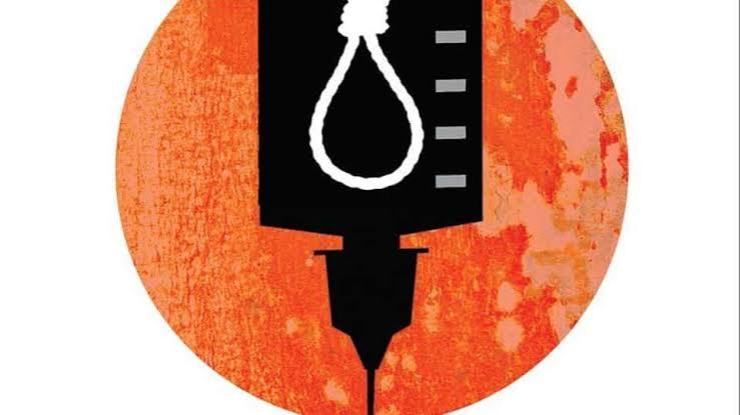
The capital punishment has been a subject of debate for a very long time. The arguments changer from does it deter crimes ? or is it that criminals are capable of redemption? Will it satisfy the society’s need to punish those who do unspeakable violent crimes? The arguments go on and on about even if the ways to execute the criminal are inhumane.
There are many international treaties and conventions who try to restrict the use of the death penalty of the capital punishment as much as possible. Protocols 6 and 13 to the European Convention on Human Rights, and the Additional Protocol to the American Convention on Human Rights. The International Covenant on Civil and Political Rights, ratified by 160 nations, restricts the manner in which the death penalty may be imposed and promotes abolition.
When getting into a debate relating to the abolishment of the death penalty, people try to weigh the pros and cons of either keeping it or to put an end to it. The debate covers, that the death penalty is saved as an eye to eye punishment, that if you take someone’s life your right to life should be taken from you. However, this argument can be weighed that what happens that if the person executed is in the end innocent? In this case the state would have taken the life of a its own citizen and this citizen turns out innocent and also that in some cases where a person is wrongfully convicted and sentenced to imprisonment he still has a chance of being released and complete the rest of his life.(1)
Also, others see that, still having the death penalty is a way in which the state has so much power, there’s also a need to say that the most countries who used the death penalty is 2016 are China, Iran, and Saudi Arabia and as shown they are countries who have a high amounts of authority in general on its citizens and they used it as a way to control its citizens. And that’s why as a counter argument that doing this is morally wrong, and there are other ways to control citizens not in the way of ending their lives. (2)
The capital punishment for example in Egypt is still applicable it is also still applicable in the United States however, there are 3 states who decided to abolish it. In Egypt, the court sentenced 44 of its citizen to death in 2016 and 35 in 2017 and in 2018 so far 75 were executed and 47 others were sentenced to life imprisonment. I find it hard to believe that all of those people deserved to have their lives taken and that none of them at least was actually innocent but how will we know ? and how can the state be sure that the person executed deserved to have his life ended. The US supreme court had a lot of opinions on the death penalty, it stated that that the execution of juvenile offenders violated the Eighth Amendment’s prohibition of cruel and unusual punishment and that the eighth amendment involves nothing more, and nothing less, than evaluating whether a punishment violates human dignity. (3)
To conclude, it’s crazy to know how much the wordings of a law can be manipulated or how much a law can be vague, and that even a state ratifies a convention for example like the ICCPR that tries to minimize the use of the death penalty or abolish it and that the US ratified it but still has states that use the Death penalty.
THE REFERENCES:
1)https://en.m.wikipedia.org/wiki/Capital_punishment_debate_in_the_United_States
2)https://www.washingtonexaminer.com/news/egypt-sentences-75-protesters-to-death-after-mass-trial
3)https://deathpenalty.procon.org/view.resource.php?resourceID=002000
4) https://www.youtube.com/watch?v=ceVYO03zcZU
 Reem ElDahan